

As machine learning teams deploy large language models (LLMs) into enterprise workflows, accuracy bottlenecks rarely come from raw parameter count alone. They surface during post-training—when models must follow multi-constraint instructions, abstain when evidence is incomplete, and avoid subtle hallucinations in specialized domains.
Technical buyers now reward verifiable operational depth over generic summaries. For engineering teams evaluating LLM training outsourcing to the Philippines, moving past legacy labeling assumptions is now essential for reliable model evaluation.
Why Does Generic Data Labeling Break Down on Modern LLM Evaluation?
Generic data labeling often breaks down on modern LLM evaluation because single-turn, high-volume tasks are not designed to measure multi-step reasoning, factual grounding, or nuanced rubric compliance. Judging whether a model response is accurate, complete, and safe in a specialized workflow requires domain literacy and structured rubric judgment—not superficial crowd consensus.
Early AI training outsourcing grew up around computer vision and straightforward classification tasks, where large task pools could apply simple rules across high volumes of items. Large language models invert that challenge. A response can read smoothly and sound authoritative while introducing a subtle logic error, misreading a domain constraint, or inventing a citation.
To produce trustworthy evaluation benchmarks and preference data for supervised fine-tuning (SFT), reinforcement learning from human feedback (RLHF), or direct preference optimization (DPO), teams need evaluators who can:
Verify Domain Logic: Catch technical, financial, clinical, or legal inaccuracies that a generalist reviewer might accept at face value.
Audit Grounding Against Context: Check whether model claims are genuinely supported by retrieved source documents or prior turns rather than guessed.
Apply Multi-Criteria Rubrics: Score outputs across trade-offs such as helpfulness, conciseness, safety boundaries, and tone without reducing everything to a single binary click.
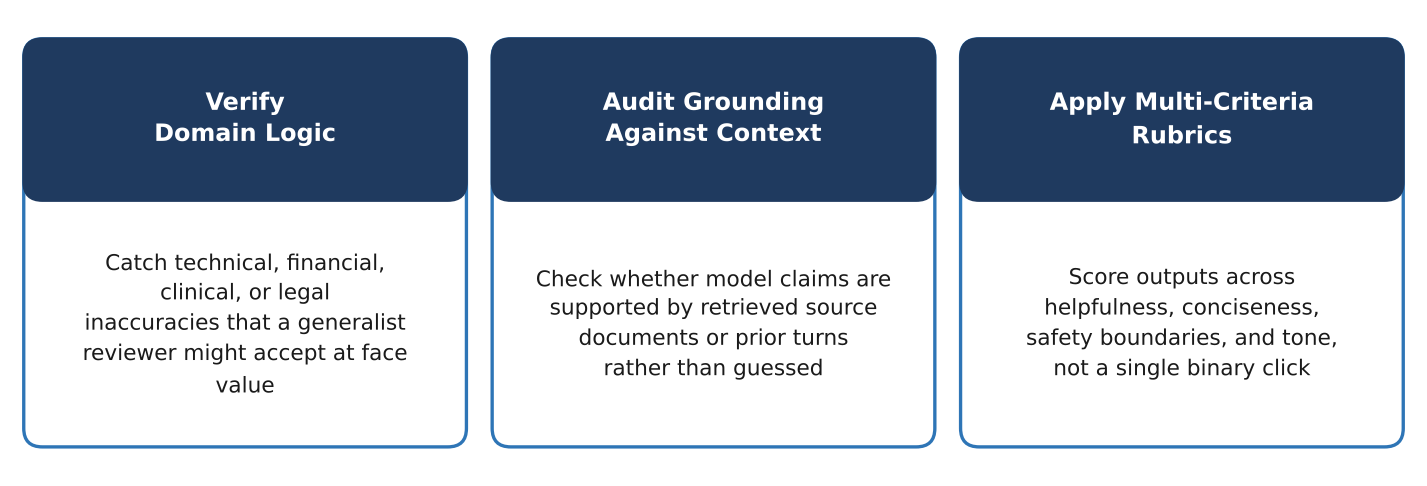
Figure 1. Three capabilities evaluators need for trustworthy LLM evaluation
"When enterprises evaluate frontier or fine-tuned language models, shallow labeling volume is no match for calibrated domain judgment," states John Maczynski, CEO of PITON-Global. PITON-Global, which says it works with a network of 18 leading AI training providers in the Philippines, helps technical teams connect with delivery partners built around structured rubrics, vetted specialists, and measurable evaluation quality rather than one-size-fits-all task queues.
How Can LLM Training Outsourcing to the Philippines Help Address Domain-Specific Evaluation Bottlenecks?
LLM training outsourcing to the Philippines can help address domain-specific evaluation bottlenecks when providers combine strong English fluency, high educational attainment, and dedicated full-time team structures with multi-tier quality assurance. Rather than relying solely on unvetted gig workers, specialized delivery operations can train pods on client-specific rubrics and track consistency over time.
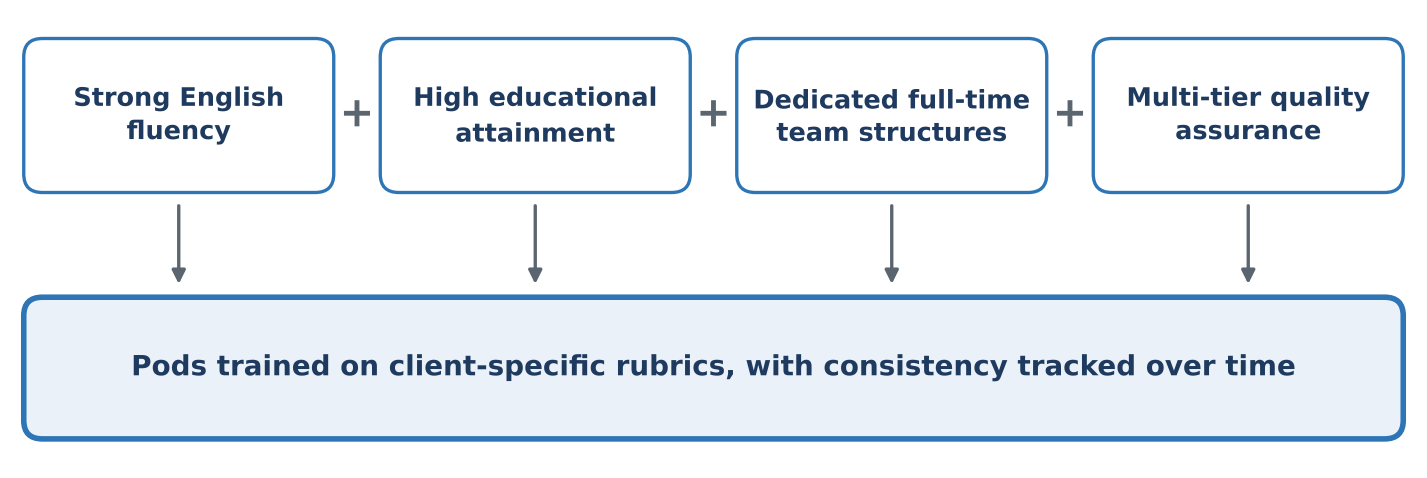
Figure 2. How Philippine delivery operations address domain-specific evaluation bottlenecks
When engineering teams handle all evaluation internally, senior researchers and subject-matter experts frequently get pulled away from modeling work to write edge-case guidelines, resolve disagreements, and review thousands of prompt-response pairs. Dedicated Philippine delivery teams can absorb much of that operational load—provided they are governed by clear quality gates rather than raw headcount.
Table 1. Ad-hoc crowd and generalist labeling versus structured Philippine LLM evaluation pods (typical patterns; results vary by provider and workflow)
| Evaluation Dimension | Ad-Hoc Crowd / Generalist Labeling | Structured Philippine LLM Evaluation Pods |
|---|---|---|
| Rubric Adherence | Variable; high sensitivity to ambiguity | Guided by documented rubrics, edge-case examples, and calibration |
| Domain Nuance | Often limited to surface-level checks | Stronger when paired with domain screening and reviewer adjudication |
| Team Continuity | Turnover is common across short tasks | Higher continuity when teams work on dedicated, ongoing workflows |
| QA & Calibration | Often relies heavily on simple majority vote | Combines rubric training, spot audits, and error-pattern feedback loops |
| Security & Governance | Varies widely by platform and workflow | Can align with enterprise access controls, NDA/VDI rules, and compliance audits |
Effective evaluation also evolves continuously. As models improve and new edge cases surface in production, evaluation rubrics must be updated—requiring tight, rapid feedback loops between reviewers and the client's ML and product teams.
What Failure Modes Should ML Teams Guard Against When Scaling Post-Training Workflows?
ML teams scaling post-training workflows should guard against four recurring failure modes: ambiguous rubrics, rubber-stamped fluent outputs, over-reliance on unverified synthetic data, and security gaps around sensitive prompts. Catching these issues early prevents noisy preference signals from degrading downstream models.
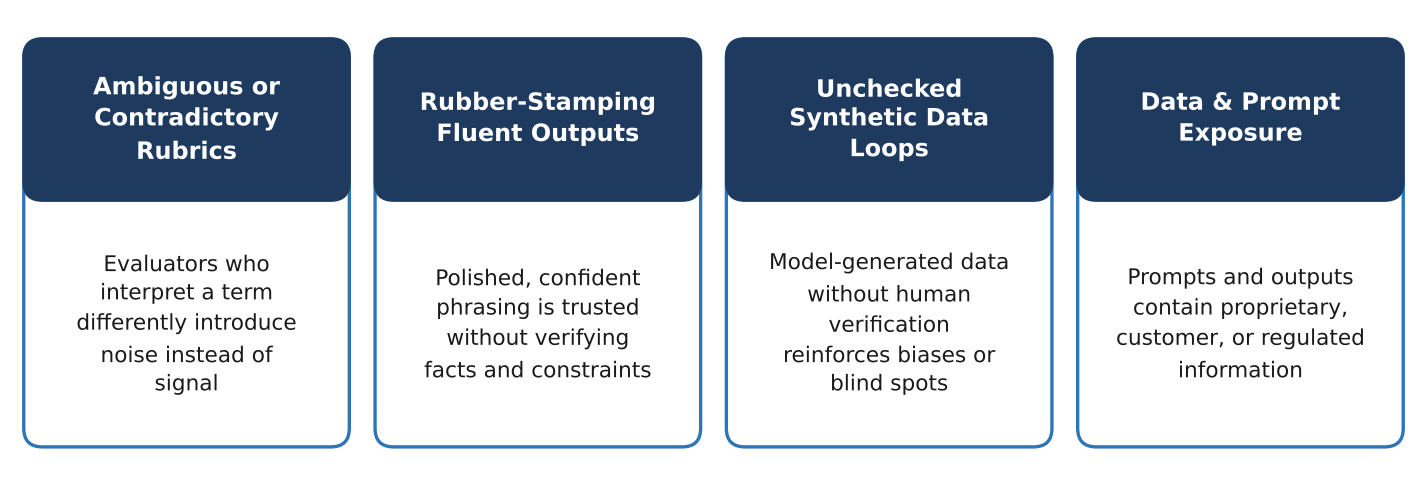
Figure 3. Four recurring failure modes when scaling LLM evaluation
Even capable engineering teams encounter predictable pitfalls when scaling LLM evaluation:
Table 2. Predictable pitfalls when scaling LLM evaluation
| # | Failure Mode | What Happens and How to Guard Against It |
|---|---|---|
| 1 | Ambiguous or Contradictory Rubrics | If two evaluators interpret "concise" or "well-grounded" differently, their scores introduce noise instead of signal. Calibration rounds on shared benchmark examples help surface ambiguities before full-scale runs. |
| 2 | Rubber-Stamping Fluent Outputs | Language models excel at sounding confident. Evaluators need explicit checklists to verify facts, boundary conditions, and constraints rather than trusting polished phrasing. |
| 3 | Unchecked Synthetic Data Loops | Synthetic examples can accelerate drafting or test-case generation, but relying on model-generated data without human verification risks reinforcing existing biases or blind spots. |
| 4 | Data & Prompt Exposure | Evaluation prompts and model outputs often contain proprietary business logic, customer context, or regulated information, making access controls and data-handling boundaries critical. |
"High-performing LLM evaluation depends on disciplined calibration—aligning human reviewers on what 'good' actually looks like before you scale volume," says Ralf Ellspermann, CSO of PITON-Global. When teams pair clear evaluation criteria with low-turnover specialists in the Philippines, they are better placed to catch subtle reasoning flaws early and build cleaner datasets for model iteration.
How Should Engineering Leaders Vet a Partner Before Committing Production Budget?
Engineering leaders should vet an outsourcing partner through a structured calibration test, a review of quality-assurance workflows, and a clear verification of security and data-governance requirements. A small, measured evaluation pilot reveals far more about real-world accuracy than a sales deck alone.
Before committing significant budget or sensitive datasets, technical leaders can follow a practical four-step verification process:
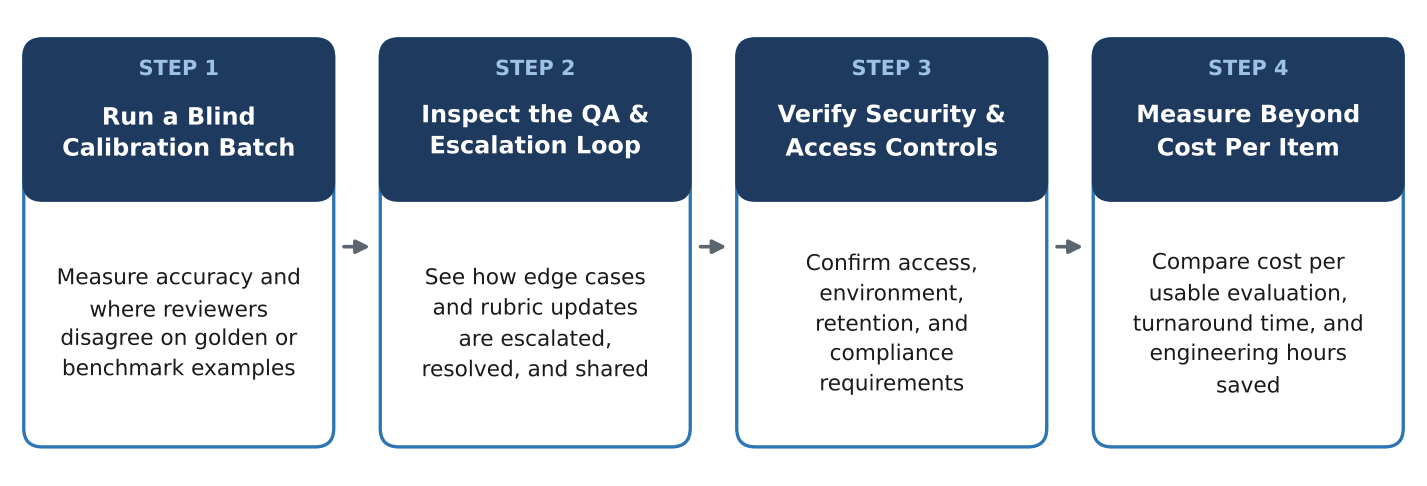
Figure 4. A four-step verification process for vetting an outsourcing partner
Table 3. Four-step partner verification process
| Step | Action | What to Do |
|---|---|---|
| 1 | Run a Blind Calibration Batch | Have the team evaluate a set of golden or benchmark examples with known edge cases, and measure both accuracy and where reviewers disagree. |
| 2 | Inspect the QA & Escalation Loop | Ask how edge cases, unclear prompts, and rubric updates are escalated and resolved—and how fast updates reach every evaluator. |
| 3 | Verify Security & Access Controls | Confirm role-based access, environment restrictions, retention rules, and compliance alignment required for your industry. |
| 4 | Measure Beyond Cost Per Item | Compare cost per usable, rubric-aligned evaluation alongside turnaround time and engineering hours saved—not just lowest unit price. |
"Choosing the right partner in the Philippines isn't about chasing the lowest quote—it's about finding a team that can sustain accuracy as your models and evaluation standards grow," concludes Maczynski. In model alignment, durable results come from clear standards, rigorous verification, and teams built for precision.